

TAKEUP
IN DETAILS
Discover our projects, the process, and the impact on our planet.

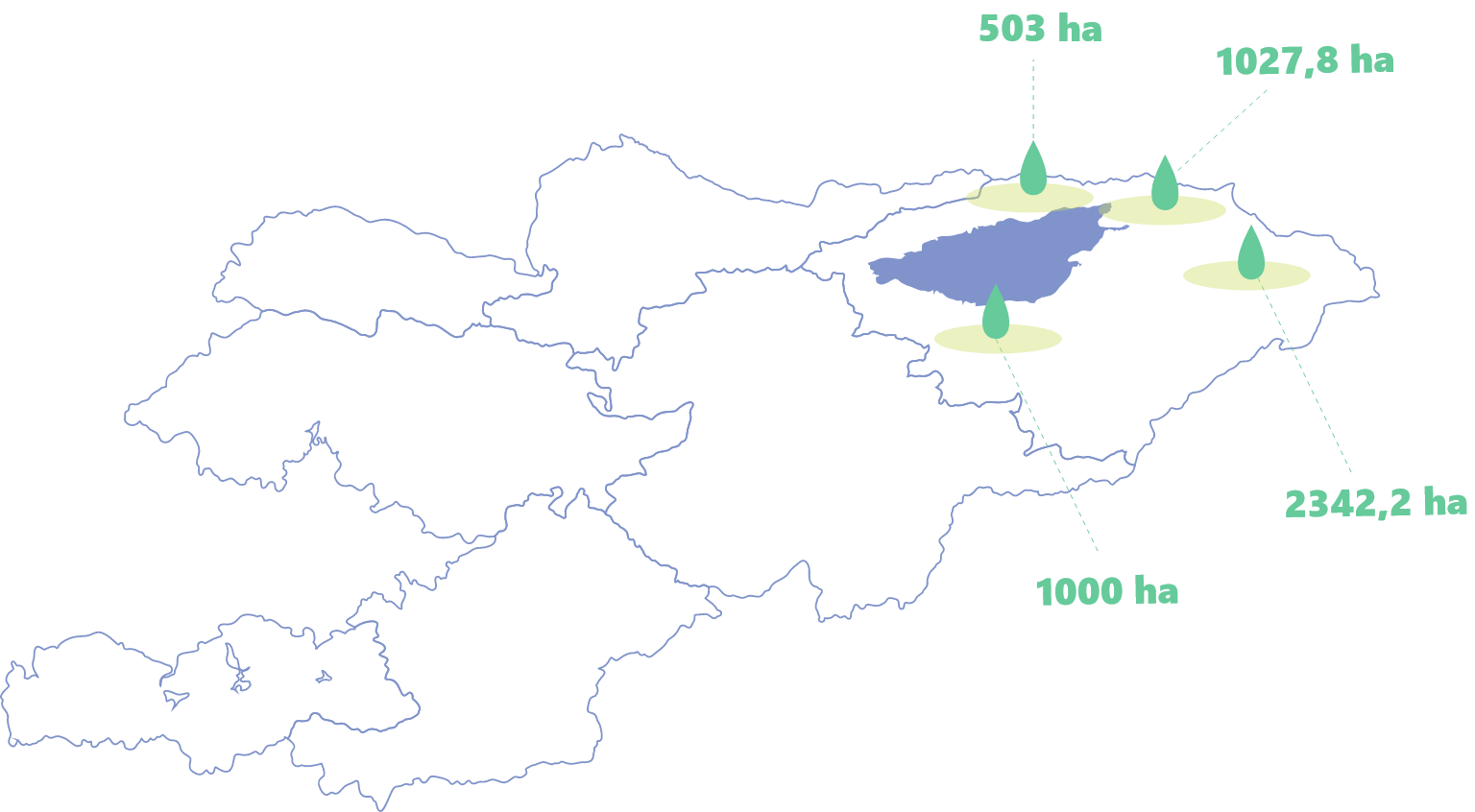
The forest ecosystems of Kyrgyzstan are vital indicators of ecological stability in Central Asia but are currently in poor condition. Issues like poor natural regeneration, deforestation, and lack of funding have led to significant environmental degradation and limited agricultural use. Rebalancing forest biodiversity could support CO2 compensation and benefit local communities both locally and globally.

Increase the
productivity of
forest land

Preserve local
biodiversity

Help the social
development
generated by
the new forest

Help to offset CO2
on Earth
We have launched work in the country that involves public institutions, farmers and breeders, students, and researchers. We also contribute to thousands of food-insecure people, including women-headed households, who received training in basic reforestation activities such as cultivating seeds. The project allows them to benefit from protected soil, improved agriculture, and new know-how for boosting quick-growing.

The expert group decided to plant a mix of conifers and deciduous species, creating a diverse forest adapted to the area’s climate and soil characteristics.
Scots pine
Wild olive
Pine
Elm
Birch

For this project, we involved local people as:
Agronomists
Trees laborers
Transportation
Farmers
Students

Replanting any unhealthy or failed trees to ensure a sufficient number of healthy, living plants to form a high-quality forest.
Survival: monitoring the trees for any signs of nutrient deficiency.
Nutritional deficiencies: controlling vegetation that continues to compete with the ecosystem.
Competing Vegetation: protecting the trees against the many agents that can cause damage (frost, fire, animals).